
Dental Bridges

What are braces?
What Qualifies You For A Dental Bridge?
- One or more permanent teeth are missing.
- Being in good general health (e.g., no serious medical conditions, infections, or other health problems).
- Having solid bone structure and healthy teeth to support the bridge
- Having clean teeth.
- Able to practice good oral care to preserve the condition of the dental bridge.

Types Of Dental Bridges
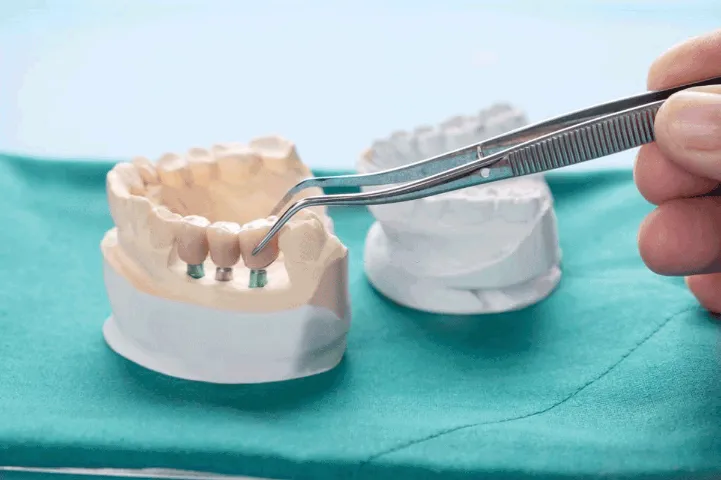
Dental bridges come in four basic varieties:
- Traditional bridge
- cantilever
- Maryland
- Implant-supported
You can uniformly apply pressure to your teeth thanks to these braces. Wires constructed of stainless steel, nickel-titanium, or copper titanium connect and encircle them.
Regular/ Traditional dental bridge
Dental bridge with cantilevers
Cantilever dental bridges are similar to typical bridges in that just one abutment tooth serves as the anchor for the pontic, which is secured in place by a dental crown.
You just need one healthy tooth next to the gap left by the lost tooth to support a cantilever bridge.
Maryland bridge for teeth
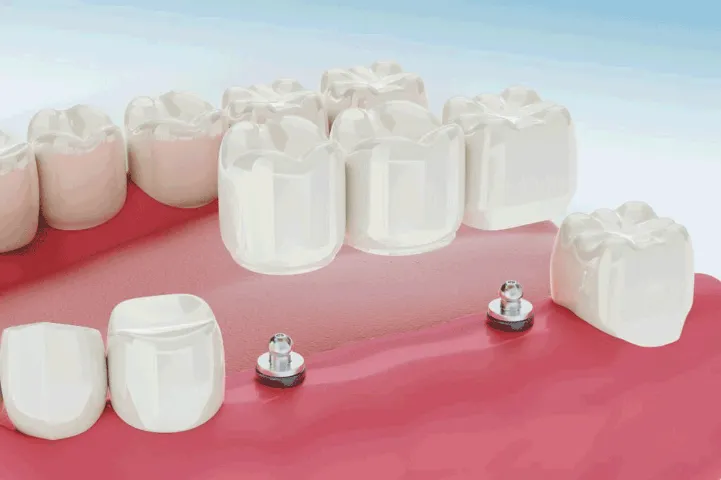
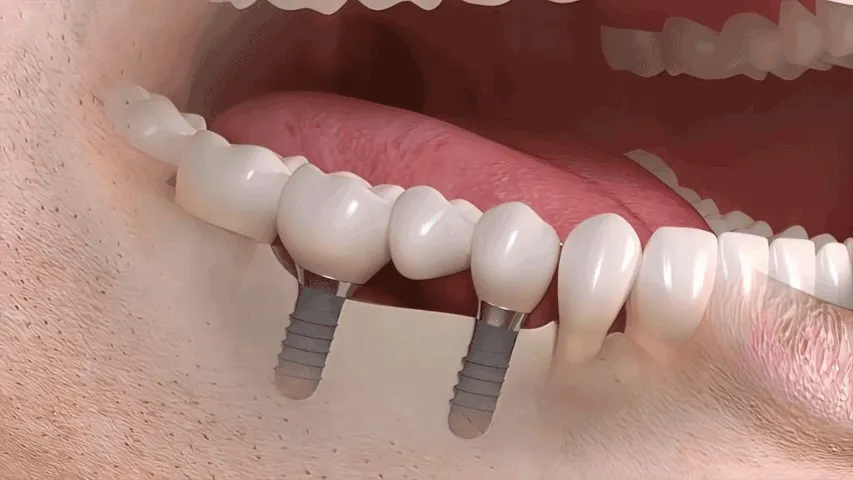
Dental bridge supported by implants
- embedding the implants into the jawbone
- another procedure to implant the bridge
What Does A Dental Bridge Look Like?
A dental bridge, as its name suggests, is a type of bridge that dentists employ to replace lost teeth.
A dental bridge spans over a gap left by one or more missing teeth in order to reconnect the neighboring teeth, much like a bridge spans over a chasm to connect two pieces of land.
A dental bridge resembles a row of teeth in the most straightforward sense. But a dental bridge’s structure is significantly more complex.
The first thing to know is that there are four different types of dental bridges, and each type has a different appearance.
Once in the mouth, all four varieties may appear the same, although there are small distinctions between them.

Why Do I Require A Dental Bridge?
- getting your grin back
- regaining the capacity to chew properly
- regaining your speech and pronunciation, keeping your face in its natural shape, and altering your bite to evenly distribute the force when you eat to prevent your remaining teeth from shifting from their natural positions.
Dental Bridge Procedure
Getting dental bridges is a process of two steps. First, you need to have your teeth prepared so that they can be fitted with crowns (false teeth).
Then, when you get the new crowns placed, a permanent bridge will be put in place.
The first step is to make sure that all of your teeth are healthy and strong enough to be worked on.
The dentist will then take an impression of each tooth being worked on and will send it off for lab work. Once this is done, the dentist will check to make sure that no nerve tissue has been damaged during the preparation process.

How Much Does A Dental Bridge Cost?
A dental bridge may be partially or entirely covered by dental insurance if you have it.
Without insurance, a dental bridge might cost anywhere between R3 500 and R5 000 per tooth.
Side Effects Of Dental Bridges
Dental bridges are frequently used to fill the gap left by one or more missing teeth.
They’re basically a replacement for your natural tooth, but they’re held in place by crowns on either end of the bridge.
Dental bridges can be made of several different materials, including porcelain and gold. They’re typically bonded to your existing teeth with dental cement or dental composite resin.
If you need a dental bridge, you’ll probably have to undergo two separate appointments: one for the preparation work and another for the actual installation of the bridge itself.
If you’re trying to decide whether getting a dental bridge is right for you, it’s important to know about all of its risks as well as its benefits.
The most common side effect is soreness in your jaw because it takes a while for your mouth to adjust after receiving dental cement or composite resin bonding material.
In rare cases, some patients report feeling dizzy when eating food that has been prepared with certain spices that contain oils such as garlic or onion seeds (because these spices have oil).
Implants Versus Dental Bridges
Bridges are covered by many dental insurance policies, and many now also cover implants.
Depending on how well it is taken care of, a dental bridge could need to be updated every five to fifteen years, whereas implants are thought of as a permanent option.
Dental hygiene is one factor that can shorten the lifespan of all bridge types, including implants.

Dental Bridges Diet Modifications
- Sticky/crunchy candies (can pull crowns off of the abutment teeth)
- Hard candies or foods
- Sweet foods (can cause tooth decay under the crowns)
- Cosmic Nuts